
How to Avoid Costly Roof Repairs
Six habits that keep repairs small, and the early signs your roof needs a call.
Read more →Most roofs warn you long before they need replacing. Here's how to read those signs, when a repair still makes sense, and why a replacement usually wins once the patches start adding up.
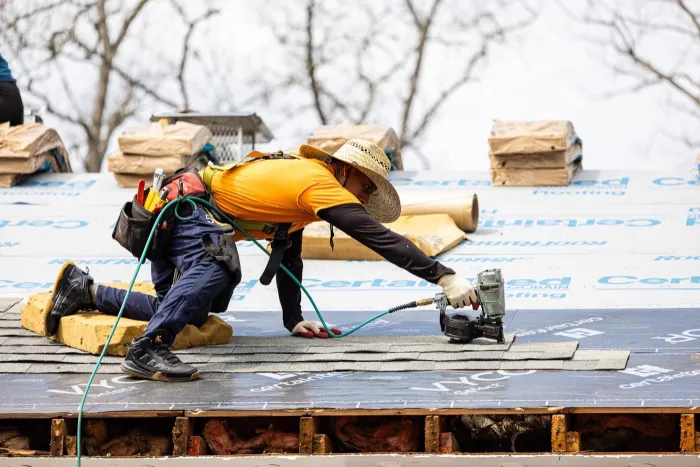
Before anyone climbs a ladder, the age of the roof tells you most of the story. An asphalt shingle roof in New England usually lasts 20 to 30 years. Traditional 3-tab shingles sit at the shorter end of that range, and thicker architectural and luxury shingles last longer. Ventilation, shade, and how well the roof was installed push any roof toward one end or the other.
If you don't know how old yours is, there are a few ways to find out. Your closing paperwork or home inspection report may list it. The town building department keeps permit records, and a reroof normally needs a permit. And if your street was built all at once, look at the neighbors: when the houses on either side are getting new roofs, yours is usually on the same clock.
A roof in the first half of its life almost always gets repaired. A roof in its last few years is where the question gets real, because every dollar of repair is buying less time.
One of these on its own is usually a repair. Several of them together, on a roof past twenty years, usually means it's time.
A sagging section is the one to take seriously right away. It usually means the decking or framing underneath has gotten wet for a long time. Don't walk on it; call us and we'll look at it from the attic and the ladder first.
Plenty of roofs that leak don't need replacing. Most leaks come from one spot: the flashing around a chimney, a cracked rubber boot around a plumbing vent, a valley where two slopes meet, or a run of shingles a storm lifted. If the rest of the roof is lying flat and holding its granules, fixing that spot is the right answer, and it's what we'll recommend.
A repair also makes sense as a bridge. If the roof is near the end of its life but it's November, or you'd rather plan the replacement than rush it, a good repair buys you a few seasons to pick the timing, the shingle, and the financing. Our roof repair crew holds a 48-hour response time on repair calls, and the assessment is free.
There's one line that changes the math. Once damage covers more than about a quarter of the roof, repairs usually stop being good value. Our guide to the 25% roofing rule covers that line in detail.
Once a roof is old enough and the repairs keep coming, a replacement usually wins for four reasons.
You'll sometimes hear that a new roof cuts your heating and cooling bills. The shingles themselves do very little for that. What changes the bill is the attic under them, the insulation and the airflow, and a replacement is the best time to fix both. Our guide to attic insulation and roof ventilation explains why.
Here's the order we'd go in if it were our house.
If it comes out as a repair, that's what we'll quote. If it's a replacement, most asphalt roofs in Tewksbury run about $9,000 to $12,000. Our roof quote form takes about a minute, and we come back within 24 hours with next steps or a preliminary number. Financing starts at 0% for 12 months through GreenSky, with 10- and 15-year plans if you'd rather keep the monthly payment low.
If the answer is a new roof, the next question is which shingle. We install CertainTeed 3-tab, architectural, and luxury shingles, and the difference is more than looks. Our guide to choosing roofing materials walks through all three, and the Roof Color Designer lets you try CertainTeed Landmark colors on a photo of your own house first. You can see the full picture of what we install on our roof replacement page.
· 81 Google Reviews · 48-hour response on repair calls · Free, no-obligation. We reply within 24 hours.
Repair or replace questions we hear every week
A single repair is always cheaper than a replacement. The question is what it buys you. On a roof in the first half of its life, a repair is the better money. On a roof past twenty years with problems on more than one slope, repairs start costing more over a few years than they save, and they don't come with a new warranty. Once damage covers more than about a quarter of the roof, replacement is usually the better value.
Yes, one slope or one section can be reroofed, and it makes sense when a single side has worn out faster than the rest or a tree came down on one area. The catch is matching: shingles fade, so new ones on one slope will look different from the old ones for a while. If the rest of the roof is close to the end of its life anyway, a full replacement is usually the better call.
Start with your closing paperwork or home inspection report, which often lists the roof's age. Your town building department keeps permit records, and a reroof normally needs a permit, so the last one pulled for the roof gives you a date. If your street was built all at once, the neighbors' roofs are a good clue too. A free inspection can also give you a read on how much life is left.
The shingles themselves do very little for your heating bill. What matters is the attic underneath: how well it's insulated and whether air moves through it the way it should. A roof replacement is the best time to fix ventilation, because the roof is open, and that's what helps with comfort, ice dams, and how long the new roof lasts.