
Is Your Roof Ready for Winter?
A ten-minute ground-level checklist, and what to do if the roof leaks in January.
Read more →Whether insurance pays for a roof comes down to one question: what caused the damage. Here's how that usually plays out for leaks, ice dams, and full replacements, and what to have ready before you call your agent.
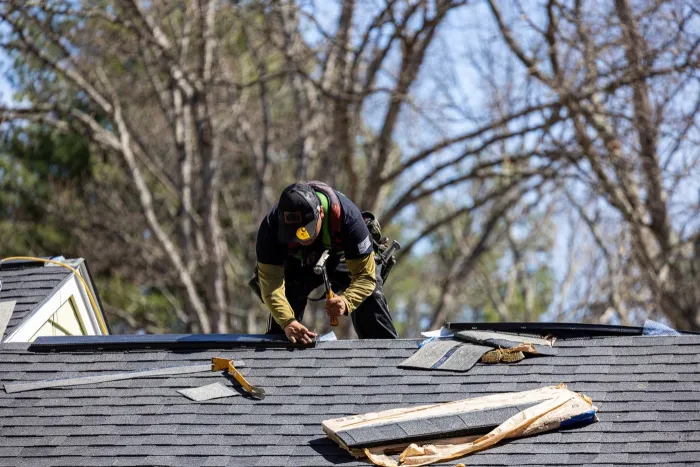
We're roofers, and we're not your insurance agent or adjuster. Everything below is general, and the only document that decides your claim is your own policy. Read it, and call your agent with questions before permanent work starts. With that said, most of the roof claims we see follow the same pattern.
A standard homeowners policy is built to pay for damage that's sudden and accidental. It generally isn't built to pay for a roof wearing out, or for damage that built up slowly because something wasn't maintained. So the same water stain on the same ceiling can be covered or not depending on how it got there.
Often, the water damage is. When an ice dam pushes meltwater under the shingles and it comes through a ceiling, many policies treat the interior damage (the drywall, insulation, paint, and flooring) as sudden water damage. Whether the policy also pays to remove the ice dam itself varies, so ask that question specifically.
Two things can complicate an ice dam claim. If the same spot has leaked every winter for years, an insurer may see it as a maintenance problem. And most policies expect you to take reasonable steps to stop more damage once you know about it, so waiting until spring to deal with a leak can work against you.
That makes the first day count. Get the water stopped, put a bucket under the drip, and move what you can out of the way. Our ice dam removal crews hold a 48-hour response all winter and clear the ice with low-pressure steam. Keep every receipt.
It can, when a covered event damaged the roof badly enough that repair doesn't make sense: a hard windstorm that stripped a slope, or a tree that came through the deck. A roof that has reached the end of its life is a maintenance cost, and a storm passing over it doesn't change that.
A few policy details decide how much a covered roof claim pays. Look for these on your declarations page and in the roof section of the policy:
Plenty of claims land in between. A roof that's 25 years old loses a slope of shingles in a windstorm, and the question becomes how much of the damage the wind did and how much was age. The adjuster sorts that out, and the policy's terms for older roofs decide the rest. Photos of your roof from a calm day help here, so it's worth snapping a few from the yard every fall. If you've had the roof inspected, keep the report with your policy. And if the adjuster's estimate doesn't match what you see on the roof, ask the insurer in writing how they reached it, and send your roofer's written assessment with your questions.
If you have a question about how your insurer is handling a claim, the Massachusetts Division of Insurance takes consumer questions about homeowners policies.
Not sure whether you're dealing with storm damage or an aging roof? That's a good first question for a free inspection. Our roof repair crews trace leaks to the source, hold a 48-hour response on repair calls, and tell you plainly what caused what. If the answer is wear and age, our guide to what a new roof costs and the financing options is the next read.
· 81 Google Reviews · 48-hour response on repair calls · Free, no-obligation. We reply within 24 hours.
Roof insurance questions we get asked
It can when a covered event, such as a windstorm, hail, or a fallen tree, damaged the roof badly enough that repair doesn't make sense. It usually doesn't cover replacing a roof that wore out with age. How much it pays depends on your policy, including whether it settles at replacement cost or actual cash value and what your deductible is. Read your policy and ask your agent.
Interior water damage from an ice dam is often covered as sudden water damage, depending on the policy. Coverage for removing the ice dam itself varies. A spot that has leaked every winter for years can be treated as a maintenance issue, so deal with ice dams promptly, photograph the damage, and call your agent early.
Usually when the leak was caused by something sudden, like wind damage, a fallen limb, or an ice dam. Usually not when the roof leaked because it was old or wasn't maintained. Every policy is different, so photograph the damage, stop what water you safely can, and call your agent before permanent repairs start.
Do both early. Call a roofer to stop active water and find the cause, and call your agent to learn what your policy covers and what they need from you. A written assessment with photos from a licensed roofer gives the adjuster a clear picture of what failed and why.