
The Best Time to Replace a Roof
How each season plays out for a roof replacement in Massachusetts, winter included.
Read more →Most roofs around Tewksbury are asphalt shingles, but asphalt covers a wide range. Here's how the three main types compare, where metal fits, and the parts of the roof that matter as much as the shingle.
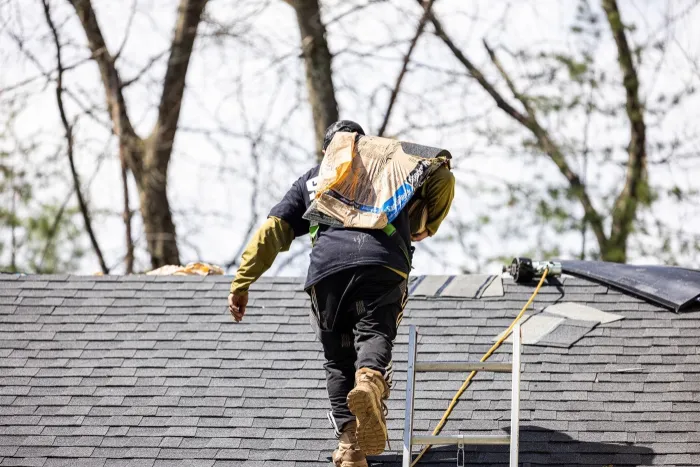
Walk any street in Tewksbury or Billerica and almost every house has an asphalt shingle roof. It suits the colonials, capes, and split-levels that make up most of the area, it costs less than metal or slate, and with the right details at the eaves it handles a Massachusetts winter well. That's why asphalt is what we install on homes, using CertainTeed shingles.
Other materials do show up. Metal roofing is durable and sheds snow, and it's often the right choice for low-slope sections where shingles won't work; that work falls under our commercial roofing services. Slate and cedar shake are on some older and higher-end homes. Both are handsome, both need specialist crews, and cedar needs more upkeep in a damp, shaded yard. For most homeowners, though, the choice comes down to which kind of asphalt shingle.
The traditional asphalt shingle. Each strip is cut into three flat tabs, which gives the roof a clean, even, brick-like pattern. They're the lightest and most affordable option and built to hold up for 20 years or more.
They're also the thinnest, which means less resistance to wind and a shorter life than the thicker options. 3-tab makes sense on a garage or shed, on a house you plan to sell soon, or anywhere the budget has to come first.
Also called dimensional or laminated shingles. Two layers are bonded together, which makes the shingle thicker and gives the roof depth and shadow lines that 3-tab can't match. They last longer, stand up to wind better, and are the choice most homeowners make when they replace a roof. CertainTeed's Landmark is the architectural line you can try in our Roof Color Designer.
Also called designer or premium shingles. They're the heaviest and thickest asphalt shingles, built to look like slate or wood shake without the weight, cost, or upkeep of the real thing. The extra thickness makes them tougher against wind, hail, and New England storms. They cost more, and they're worth it on a house where the roof is a big part of how it looks from the street.
The shingle gets all the attention, but a roof is a system, and the layers under it decide how long the shingle lasts.
This is why the installer matters as much as the shingle. As CertainTeed Shingle Master Certified installers, we can back the whole roof with CertainTeed's 50-Year Materials & Labor Warranty, plus Senco's own 10-Year Workmanship Warranty, both in writing.
Color is the part people worry about most, and it's the hardest to judge from a sample board. Our free Roof Color Designer puts any CertainTeed Landmark color on a roof we installed or on a photo of your own house. Only the shingles change, so the light and shadows on your house stay the same.
A few things to think about: the roof should work with the siding, the trim, and any brick or stone you're keeping. Darker roofs hide streaks and staining better. Lighter roofs reflect more of the summer sun. And a roof lasts decades, so a color that's safe with a few different siding colors gives you room to change the house later. Our guide to choosing a siding color covers how the two work together.
Five questions settle it for most people.
We'll walk you through all three shingle types at the free inspection, with samples, and tell you which one fits your house and your plans. If you're still deciding whether the roof needs replacing at all, start with our guide to roof repair or replacement. If you're deciding when, see the best time of year to replace a roof. Our roof replacement page covers how we install every option.
· 81 Google Reviews · 48-hour response on repair calls · Free, no-obligation. We reply within 24 hours.
Roofing material questions we get at every estimate
For most homes, architectural asphalt shingles. They handle snow, ice, and wind well when installed with ice-and-water shield at the eaves and good attic ventilation, they last longer than 3-tab, and they cost far less than slate or metal. Luxury shingles are the step up when looks and storm resistance matter most. Metal is a strong choice for low-slope sections where shingles won't work.
3-tab shingles are a single flat layer cut into three tabs, which gives the roof a flat, uniform look. They're lighter and cost less. Architectural shingles are two layers bonded together, so they're thicker, they give the roof depth and shadow lines, they resist wind better, and they last longer. Most homeowners replacing a roof choose architectural.
They are when the roof is a big part of how the house looks, or when the house takes a lot of wind. Luxury shingles are the thickest asphalt shingles, made to look like slate or cedar shake, and the extra weight makes them tougher in storms. On a low roof you can barely see from the street, architectural shingles give you most of the benefit for less.
It depends on the roof. Metal lasts a long time and sheds snow, and it's often the right answer for low-slope sections over a porch or addition. It also costs more, and snow sliding off a metal roof can land on walkways and plantings. For the main roof on most homes around here, a well-installed asphalt roof is the better value.