
How Much Does a New Roof Cost in Massachusetts?
What drives the price of a roof around Tewksbury, how to read a quote, and the financing options.
Read more →A roof is a big check to write to someone you met last week. Massachusetts gives homeowners more protection here than most people realize, and it's all public. Here's what to check, what the contract should say, and the questions that tell you the most.
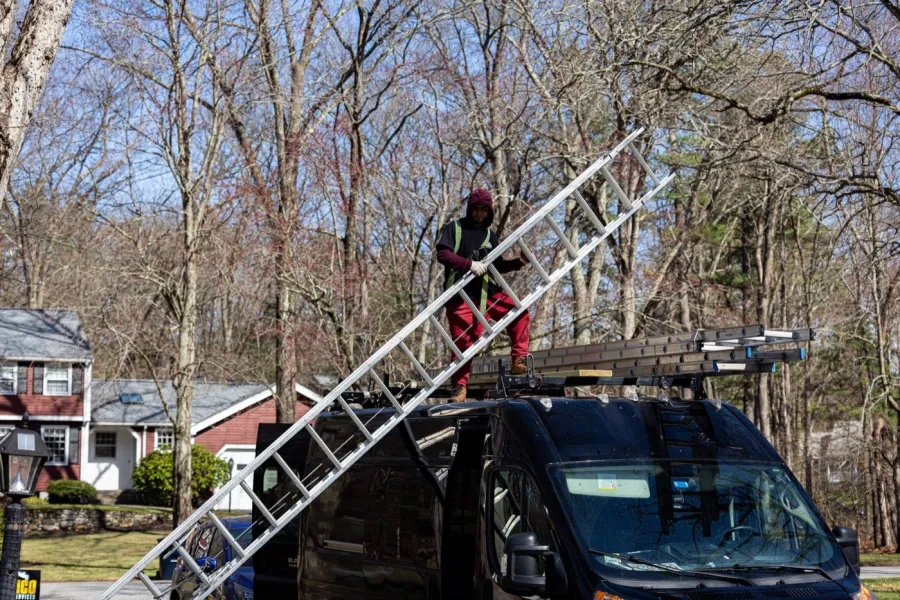
Roofing on a house in Massachusetts involves two separate state credentials, and you can look both up yourself on mass.gov.
Every contractor should hand you both numbers without hesitation. Ours are MA CSL #110124 and HIC #198449.
Insurance is the third thing to check. Ask for certificates of liability insurance and workers' compensation coverage, sent to you directly from the contractor's insurance agent. Workers' compensation is what covers the crew if someone gets hurt on your property.
Massachusetts General Laws chapter 142A, section 2, requires any residential contracting agreement over $1,000 to be in writing and signed before work starts, with a copy in your hands. Among other things, it has to include:
Under the same section, a deposit before work starts can't be more than one-third of the total price, or the actual cost of any special-order materials that have to be ordered in advance, whichever is greater. Final payment isn't due until the job is complete.
Yes. A roof replacement needs a building permit from your town's building department. Chapter 142A requires the contract to tell you which permits the job needs and that the contractor is responsible for getting them. It also spells out a detail worth knowing: homeowners who pull their own permits are excluded from the Guaranty Fund. For smaller repairs, your building department can tell you what needs a permit.
A new roof usually carries two warranties, and they cover different things.
Ask for both in writing, with how long each lasts, what each covers, and who you call. Senco is CertainTeed Shingle Master Certified, so every asphalt roof we install carries CertainTeed's 50-year materials and labor warranty plus our own 10-year workmanship warranty, both in writing from the day the job is complete.
Reviews tell you the most when you read past the star rating. Look for what people say about how the crew left the yard, how the company handled a surprise like rotted decking, and how fast someone called back when there was a question after the job. A company with a long run of reviews from towns near yours has a track record you can check, and asking for addresses of finished roofs nearby lets you see the work for yourself.
Each of these is worth a pause before you sign: a quote with no detail about scope, a deposit request above what state law allows, pressure to sign the same day, a contractor who'd rather you pull the permit, or license numbers that don't come up on mass.gov. Take the time to ask, and a good contractor will be glad you did.
We're a family-run company based at 1150 Main St in Tewksbury, and you can read more about Senco. Our roof inspections and quotes are free and written down, and you're welcome to take ours, compare it, and decide on your own time. Start with a free roof quote, or see what goes into a Senco roof replacement.
· 81 Google Reviews · 48-hour response on repair calls · Free, no-obligation. We reply within 24 hours.
Questions about hiring a roofer
Ask for two numbers, a Construction Supervisor License (CSL) and a Home Improvement Contractor (HIC) registration, and look both up on mass.gov. Ask whose CSL will be on your permit, and ask the contractor's insurance agent to send you certificates of liability and workers' compensation coverage.
It's the contractor's own written promise covering the installation, such as the nailing, flashing, and details, as opposed to the manufacturer warranty, which covers the shingles. Ask how long it lasts, what it covers, and who you call. Senco provides a 10-year workmanship warranty alongside CertainTeed's 50-year materials and labor warranty.
Yes. A roof replacement needs a building permit from your town. Under Massachusetts General Laws chapter 142A, your contract has to list the permits the job needs and state that the contractor will obtain them. Homeowners who pull their own permits are excluded from the state's Guaranty Fund.
Under chapter 142A, section 2, a deposit before work starts can't exceed one-third of the total contract price, or the actual cost of special-order materials that must be ordered in advance, whichever is greater. Final payment isn't due until the work is complete.