
Steam-Based Ice Dam Removal
A steam channel lets the trapped water drain, with no hatchet or salt on your shingles.
About half of Lowell's housing units are in buildings from before 1940, built long before attics were insulated the way they are today. Heat gets into the roof, and the roof makes ice at the edge. We take ice dams off with low-pressure steam, clear heavy snow, and fix what's causing them, on single-family houses and two- and three-families alike. Our Tewksbury shop is about ten minutes up Route 38. 48-hour response all winter, and the assessment is free.
4.8 · 81 Google Reviews 48-Hour Response Licensed & Insured
Free, no-obligation. We reply within 24 hours.
48Hour
Response
Ice dam and roof snow calls anywhere in the city get a 48-hour response all winter, and the assessment is free. If you own a two- or three-family, call the day a tenant reports a stain upstairs.
Our shop is on Main Street in Tewksbury, and Main Street turns into Rogers Street at the Lowell line. We've done roofing, gutter, and repair work in the city. Lowell is a city of older buildings, a lot of them divided into apartments, and that changes how ice dams form and who they land on. For the full rundown across every city and town we serve, see our ice dam & snow removal overview.
Census data puts the median year built for Lowell housing at 1942, and about half the city's housing units are in buildings from before 1940. Buildings from that era went up before attic insulation and soffit-to-ridge venting were standard. Some have been upgraded since, often a piece at a time, and the gaps are where the heat gets out. Warmth from the top floor rises into the attic, warms the roof deck, and melts the snow on it. The water runs down to the overhang, freezes there, and every thaw builds the dam a little higher. You can watch that happen in our interactive ice dam cutaway.
About a quarter of Lowell's housing units are in two-family and three- and four-unit buildings. In a building like that, the dam sits over everyone, and the water shows up in the top-floor unit first: a brown ring on the ceiling, a damp patch by an outside wall, water at the window trim. Shingles shed water running downhill, and the pool behind a dam backs up under them through the laps and nail holes, into the sheathing and the insulation. By the time a stain shows, the water has often been there for a while. If it's already inside, our Lowell roof repair crew traces where it got in and fixes it.
Lowell's ground snow load in the Massachusetts building code is 50 pounds per square foot, no different from Tewksbury or any other city or town we serve. In the January 2015 blizzard, a trained spotter in the city measured 33 inches of snow for the National Weather Service. A properly framed roof carries a normal winter, and what tests an older roof is a storm like that one, then a thaw, then another storm, with drifts piling into valleys and onto lower roofs while an ice dam adds weight at the eave. Sagging, creaking, or doors and windows upstairs that suddenly stick are all reasons to call. When the roof itself is past it, our roof replacement in Lowell page covers that job. We wrote up what a Massachusetts roof is built to carry, and when to worry.
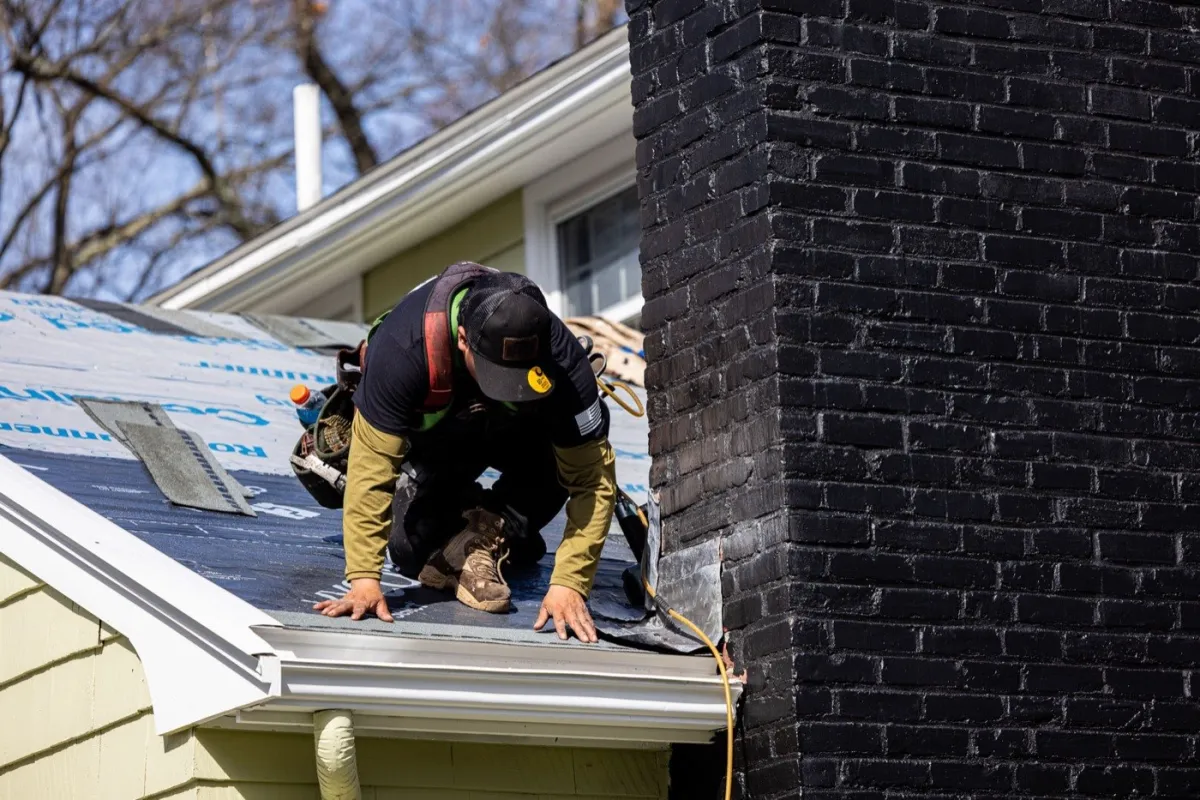
We melt a channel through the dam with low-pressure steam so the trapped water can drain off the roof. Steam doesn't chip shingles, strip granules, or force water further under the roof, all of which a hatchet, a pick, or rock salt will do. It's slower than hacking at the ice, which is a trade we'll make on every asphalt roof.
Heavy snow on a roof is weight now and fuel for the next dam. We pull it off the eaves, valleys, and drifted corners with roof-safe tools and stop a couple of inches above the shingles. The state's Department of Public Safety gives homeowners that same advice, because a shovel scraping bare asphalt does its own damage.
Steaming the ice off handles today's leak, and the fix for next winter belongs to warmer weather, in the attic and at the gutters. On a Lowell building we check three things: the insulation over the top floor, the air path from the soffit vents to the ridge, and whether the gutters and downspouts carry meltwater away from the building. Our gutters in Lowell page covers the gutters, downspouts, and the fascia behind them.
The state code also calls for an ice barrier along every eave, ice-and-water shield running from the edge to at least 24 inches inside the exterior wall line, and 36 inches up the slope on a roof pitched 8:12 or steeper. It goes on every roof we install. If an ice-damaged roof needs replacing, the permit comes from the Division of Development Services at City Hall. If the building is in one of the Lowell Historic Board's 11 districts, we also check with the board's staff before we order materials.
A steam channel lets the trapped water drain, with no hatchet or salt on your shingles.
Takes the drifted weight off eaves and valleys before the next storm adds more.
Water in a top-floor unit? We find where it got in and repair it.
Packed, frozen gutters hold meltwater at the eave. We clear the way off the roof.
On a pre-war Lowell building, the attic is usually where a repeat dam starts. We check it every visit.
A leak spreading across a ceiling, or a roof groaning under snow? We hold a 48-hour response on every winter call.
In the Acre, Centralville, the Highlands, or Belvidere, a dam that comes back every winter is pointing at something: the attic, the gutters, or a roof near the end. We'll tell you which one before we leave.
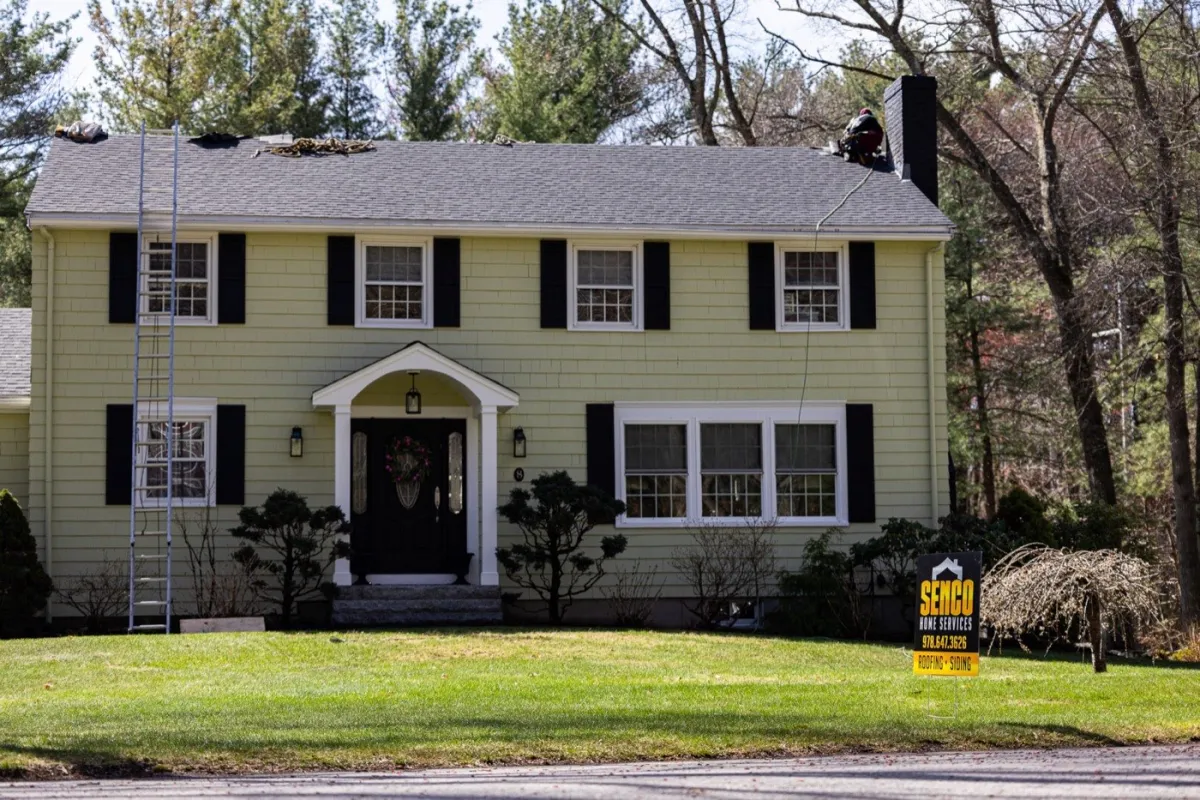
A roof that's been chipped or salted shows the damage in spring, after the crew is long gone. We're CertainTeed Shingle Master Certified, licensed and insured, and Senco has been running jobs out of Tewksbury for seven years, about ten minutes from Lowell by Route 38.
· 81 Google Reviews
That's our current Google rating across Tewksbury, Lowell, and the towns around them. These are real, unedited Google reviews from across our service area. We don't claim they're all from Lowell, and we'll add Lowell reviews here as we collect them.
We had an excellent experience with Senco. Chris was amazing! He was professional, patient, explained things clearly and answered all our questions. He always returned our phone inquiries. He and his workers went above and beyond our expectations. His crew replaced our roof in one day. Clean up was great. We also had Senco remove the ice dams prior to having the roof replaced. Once again, Senco's pricing was fair, the crew was hard working and responsive to any concerns we may have had. I highly recommend this company and would use them again.Elaine Levine · Google Review
Senco did many homes in my neighborhood. I recognized their competence, honesty and quality right away and knew I had to have the Senco team on my roof too. Very satisfied with all aspects of the demolition and installation which was quite complex. Replaced facia boards with AZEK, new gutters, and a new roof. Thanks again Senco!! Excellent job!!Jim O. · Google Review
Owner, Chris, was extremely knowledgeable and very professional. He always responded promptly to our questions and we always felt we were important to him. His crew worked so great together, like they never had to ask each other for anything, they just knew what was next. The job was started earlier than planned and everything was done above and beyond what one would expect. We would, and have, already recommended Senco Home Services to other homeowners and look forward to having him back to replace our old windows. Thank you, Chris, for making this an easy decision for us and for providing quality workmanship. Stephen and Melissa Spinosa in BurlingtonJenna Spinosa · Google Review
Any roof can dam up after a bad storm. A stain that comes back to the same ceiling year after year, especially in a building from before the war, usually points to the attic, the gutters, or a roof that's close to done. We look at the whole building before we leave.
You can finance prevention work too. See your financing options →
· 81 Google Reviews · 48-hour response, all winter · Free, no-obligation. We reply within 24 hours.
Lowell ice dam questions
Mostly because of when they were built. Census data puts the median Lowell home at 1942, and about half the city's housing units are in buildings from before 1940, before attic insulation and soffit-to-ridge venting were standard. Heat from the top floor warms the roof deck, the snow melts mid-roof, and the water refreezes at the eave, which sits outside the heated building and stays cold. Steam clears the dam, and the attic work that keeps it from coming back is best scheduled for warm weather.
Call us that day. In a two- or three-family, an ice dam leaks into the top-floor unit first, and the stain is often the last thing to show, after the water has soaked the sheathing and insulation above it. We'll steam the dam, find where the water got in, and give you dates for any repair so you can let your tenants know.
You need a building permit. Roofing is on the city's list of work that requires one, issued by the Division of Development Services at City Hall, 375 Merrimack Street, 2nd floor, Room 55 (978-674-4144). The fee is based on the total cost of the job, and the city wants the property's taxes and fees current first. Whether the Lowell Historic Board gets involved depends on the address. The board reviews work in 11 districts, and its Downtown standards cover roofing that's visible from the ground. The board's advice is to ask its staff, so we check with them before ordering shingles.
Our shop is on Main Street in Tewksbury, about ten minutes from Lowell up Route 38. Ice dam and roof snow calls get a 48-hour response all winter, in all eight of the city's neighborhoods, from Pawtucketville to South Lowell. If a tenant has water coming through a ceiling, say so and we'll move that call up.
Lowell is in the 50 pounds per square foot column of the Massachusetts code's ground snow load table, like every city and town we serve. In the January 2015 blizzard, a trained spotter in Lowell measured 33 inches for the National Weather Service. That's the kind of storm that tests an older roof: deep snow drifting into valleys and against taller walls, then a thaw that turns some of it to ice at the eaves. If you hear creaking or see a sag, call us.
No. Low-pressure steam melts a drain channel through the ice down to the shingle surface. It doesn't crack shingles or knock granules loose the way a hatchet or pick does, and it leaves no rock salt behind to corrode shingles and gutters.
We take ice dam and roof snow calls across all of Lowell and the rest of Northeastern Massachusetts. If your town isn't listed, call anyway. For gutters, siding, repairs, and the rest of what we do in the city, see our Lowell location page.
Emergency winter work and the follow-up repairs are financing-eligible. See your financing options →